The Heather Hasson Story | FIGS
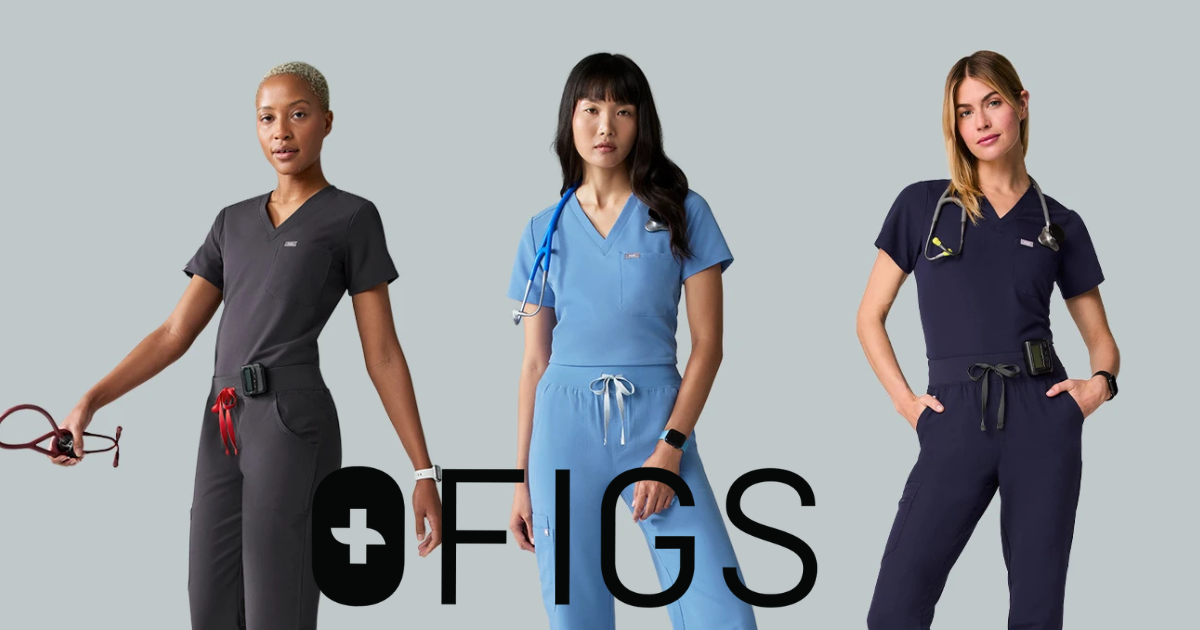
Today's episode starts with a cup of coffee. Just two friends catching up after a long shift — one of them a nurse practitioner at Cedars-Sinai, still in her scrubs. And Heather Hasson looked at her friend and thought: you are a highly educated professional who just spent sixteen hours keeping people alive. Why are you wearing that?
Heather Hasson is the co-founder of FIGS — the medical apparel brand that went public on the New York Stock Exchange in 2021, making her and co-founder Trina Spear the first female co-founders to take a company public together. She built a brand in a $10 billion industry that nobody had bothered to innovate in for decades. In this episode I talk about what she saw that everyone else had stopped seeing, what she did about it with a tape measure and a kitchen table, how she and Trina sold scrubs out of a car trunk in hospital parking lots during shift changes, and why the most radical business idea is sometimes also the most obvious human one. This one is about paying attention. About looking at the people doing the hard, invisible work and deciding they deserve something better. I think it'll stay with you.
-
Welcome back to Fifteenish. This is Leah. Hey, friends.
Okay, let's start out with a cup of coffee. This is a story about two friends just catching up after a long day.
One of them had just finished a shift at Cedars-Sinai, and she sat down still in her scrubs, and the other one looked at her and thought, you are a highly educated, incredibly skilled professional who just spent 16 hours keeping people alive.
Why are you wearing that? That thought, that one slightly judgmental, totally reasonable thought became a billion-dollar company. Her name is Heather Hasson.
She's the co-founder of FIGS, the medical apparel brand that went public on the New York Stock Exchange in 2021, which made her and her co-founder, Trina Spear, the first female co-founders to take a company public together.
She built a brand in a $10 billion industry that nobody had bothered to innovate for decades. And she did it by noticing something that had been right in front of everyone the whole time. This is a Heather Hasson story.
Heather grew up in Los Angeles and went to the University of Wisconsin as a pre-med student. And one of those things pre-med students do is work with cadavers, which means at some point early in her career, she put her first pair of scrubs on.
She described them as boxy, baggy and itchy, which honestly is probably the most accurate description of hospital scrubs ever written. But she filed it away and moved on because she ended up pivoting from medicine to fashion.
She launched her own handbag line at 22 years old while living in Rome, and she built a career in that world instead. Fashion and design was just her thing, and she was really good at it.
And I think that detail matters more than it might seem because Heather wasn't someone who noticed a problem. She was someone with a specific skill set to actually fix it. She understood fabric and she understood fit.
She understood how to look at a garment and see what was wrong with it and know exactly what to do differently. She had spent years developing that eye.
And when she finally turned it towards something that needed fixing, like really needed fixing, she had everything she needed to actually do something about it.
2:15
The Scrubs Problem
But she never quite forgot about those scrubs. And then let's dive into that coffee story. So picture the scene.
It was back in Los Angeles. She was catching up with a friend who works as a nurse practitioner at Cedars-Sinai. She just got done with a long shift.
She was still in her scrubs, and Heather was sitting across from her, watching her friend constantly adjusting and pulling and shifting in her uniform. And she's thinking, this woman has a graduate degree. She works 16-hour shifts.
She is exceptionally good at an incredibly difficult job. And she's wearing a garment that looks like it was designed in 1972 and hasn't been touched since. She said it out loud, you know, you make a decent amount of money.
Why are you wearing those? And her friend laughed because what choice did she have?
You went to a medical supply store, which was in a small fluorescent lit shop filled with wheelchairs and canes and essentially one brand of scrubs and you just bought what was there. Nobody had made anything better. Nobody even tried.
And Heather went in with her just to see it. She said it was like walking into a time capsule. The scrubs were stacked in plastic packaging.
One size fits many. The material was made of rough cotton. There was a label on the back that literally announced your size to the world.
There was no tailoring, no design thinking at all. Just, here's a garment, put it on, go save some lives.
She stood in that shop and thought, Lululemon exists, Nike exists, brands that have spent billions of dollars thinking about what athletes need to perform at their best, the fit, the fabric, the function, and the people who work in emergency rooms
and ICUs and hospitals, who were on their feet for 12 and 16 hours at a stretch, who needs to move freely and carry things and wash their hands 100 times a day, they just get this, a paper bag with a size label. Well, Heather went home, she pulled
out her tape measure and took her friends' measurements. She redesigned the scrubs herself, adjusting the seams, the front rise, the shoulders, she brought in the chest, made them fit like actual clothing instead of a paper bag, and then she gave
them back to her. A colleague of Heather's friend saw them and she called her, Hey, scrubs girl, can you make me a pair too? Scrubs girl, yes. That was the moment.
Now, I want to stay here for a second because I think this is part of the story that gets maybe glossed over in favor of the IPO headline and that billion dollar evaluation. And while all those things are really incredible, we'll get there.
But what I keep coming to is this, a $10 billion industry, one in 10 Americans wear scrubs, $60 billion worldwide, and nobody, nobody, not one person.
Not one brand, not one designer, had looked at the people doing some of the hardest, most important work in the world and thought, they deserve something better than this. And it's not like it wasn't obvious because it absolutely was.
Heather saw it immediately. Her friend's colleague saw it the second she tried on a better pair. The problem was right there in plain sight for anyone who bothered to look.
And nobody looked for decades. Nobody looked. And I think about why that is.
I think part of it is that maybe scrubs are what they are. The people wearing them are just heads down doing incredible, demanding work.
And the assumption has always been that comfort and function and aesthetics are a luxury that they don't get to want. That asking for better work wear is somehow maybe besides the point when you're saving lives. But Heather didn't see it that way.
She thought the opposite, that the people doing the most important work deserved the best comfort, the best clothing. And that includes being able to get through a 16 hour shift without having to constantly adjust a uniform that doesn't fit.
That reframe, that simple yet obvious, somehow completely overlooked reframe is a whole company now. Heather connected with Trina Spear through a mutual friend.
Trina had a Harvard MBA and had been working on Wall Street at Blackstone, and actually had done a private equity deal for large scrubs manufacturers. So she understood the market from the financial side.
She knew exactly how stagnant and underserved it was. She knew the numbers. And when a mutual friend introduced her to Heather, who was already designing better scrubs, something just clicked.
Trina liquidated her 401k to fund the first production run. That was not a small thing. That is really just someone who believes in something enough to bet her entire retirement savings on it.
She had a stable, well-pinned career on Wall Street. She didn't have to do any of this. But she looked at what Heather was building and she said, I want in.
And then she put everything she had behind it.
6:40
Building FIGS
They launched FIGS in 2013, going direct to consumer, which was completely unheard of in medical peril at the time. No medical supply stores, no middlemen.
All they had was that website and a product and a conviction that healthcare workers deserved better than what existed. And they sold scrubs out of the trunk of their car in hospital parking lots during shift changes.
They were standing outside emergency rooms with a rack of clothes and a belief that if they could just get the product in people's hands, that they would see the difference immediately. I really love that image.
Just two women, one with a fashion background, one with a Harvard MBA and a Wall Street career, just standing in a parking lot at six in the morning during a shift change, while they were flagging down nurses and doctors saying, hey, can I show you
something? This wasn't some big launch event. It was just the most direct way possible to prove that what they had made was better than what existed. And it worked immediately.
Healthcare workers would try on a pair and look up and go, wait, these are actually really good. And then they'd want to know where to get more. And then they would tell their colleagues.
And then their colleagues would tell theirs. Word spread through hospitals the way word spreads through any tight-knit professional community. Fast and with real conviction.
Because nurses and doctors and techs trust each other's recommendations in a way that no marketing campaign can replicate. They named the company FIGS after Heather's favorite fruit. In May 2021, FIGS went public on the New York Stock Exchange.
Heather and Trina became the first female co-founders to take a company public together. The stock opened at $22 a share and the company was valued at over $4 billion at its peak. Think about what that means for a second.
The first female co-founders, not the first female co-founders in their industry, the first ever on the New York Stock Exchange, which has been around since 1792.
It took until 2021 for two women to ring that belt together as co-founders of the same company and they did it selling scrubs.
8:42
The Power of Noticing
Okay, let's dive in to the actual lesson here because while it's not the IPO or the growth strategy or the DTC model or even the product innovation, it's something simpler and harder than all of that. It's the noticing.
Heather looked at something that had been sitting in plain sight for 50 plus years and asked a question that apparently nobody had bothered to ask. And it wasn't because the answer was complicated.
But because it required a certain kind of attention or a willingness to actually see what was right in front of you, Heather saw it differently. She noticed.
I think about how many times in our lives are like that, like things that have always been a certain way that maybe we've accepted because everyone else accepted them. I wonder what would completely unravel if one person stopped and asked, why?
Why is it like this? Does it have to be? What would it look like if it were different?
Most people don't ask those questions. It has nothing to do with their smarts. It just means that you might have to do something about the answer and doing something is harder than accepting the thing as it is.
Heather asked and then she did something about it. I think about that in my own life because I've been in the scrubs. Not literally, but I've been the person showing up in something that didn't fit.
In situations where the tools I was given were just not good enough and I accepted it. For a long time, I just accepted it because that's what you do. You show up, you make do, and you don't complain about that quote unquote uniform.
I think about what it would have meant to have someone look at me in that season and say, wait, you deserve better than this.
You're working hard, you're doing something that matters, and what you've been given is not good enough for what you're doing.
That's what Heather did for her friend and that's what FIGS did for the entire industry of people who had been two heads down and demand better for themselves. I also think about who she was looking at.
Her friend is a nurse practitioner, a person who spent years getting educated and trained and credentialed to do something incredibly hard and important.
And the system had decided that this person, the skilled irreplaceable person, didn't need good work wear. That what they wore didn't matter, that nobody was going to invest in making it better.
But Heather looked at her friend and thought, that's wrong. You matter. What you wear matters and you deserve better than what you've been given.
That's not some small thought. That's actually a big radical thought. Now, I want you to think about the people in your life who are in those scrubs.
Not again, literally, but the people who are doing that hard, important, often invisible work and have just accepted the things that they have been given because no one ever told them that they deserve better.
Think about the friend who has been doing the same undervalued job for ten years because she didn't think she's allowed to ask her more.
Or the person in your own mirror, you, who keep showing up in something that doesn't fit because good enough became the baseline so long ago that you forgot it wasn't the standard.
What would it look like if someone, if you, looked at them the way Heather looked at her friend over that cup of coffee and said, you make a decent amount of money, your work is incredibly hard, you deserve something better than this.
Sometimes the best business idea is also the most obvious one. You see someone not being seen and you decide to fix it. So what are you looking at that everyone else has stopped seeing?
What's the thing that's been wrong for so long that people have just accepted it just the way things are? What would you build if you stopped walking past it? Thanks for being here.
I'll see you next week.
Sources & Disclaimer
FIGS — wearfigs.com/pages/our-story
Surface Magazine — Don't Want No Scrubs? #WearFIGS (December 2019)
Fast Company — Female Founders Give Scrubs a Functional, Fashionable Makeover (August 2018)
Inc. Magazine — Medical Scrubs Are a $10 Billion Market, but No One Liked Them — Until This Startup Made Them Cool (August 2018)
Built on YES — Heather Hasson & Trina Spear: The Women Who Reinvented Scrubs and Made $700M Doing It (March 2025)
Wikipedia — FIGS entry
Meghan, Duchess of Sussex — Confessions of a Female Founder Podcast, Episode: Disrupting the Dress Code with FIGS' Heather Hasson (May 2025)
All facts shared in this episode are based on information available at the time of recording. Any personal reflections, interpretations, or opinions are my own. If anything is found to be inaccurate, I'm happy to issue a correction.