The Cassandra Morales Thurswell Story | Kitsch
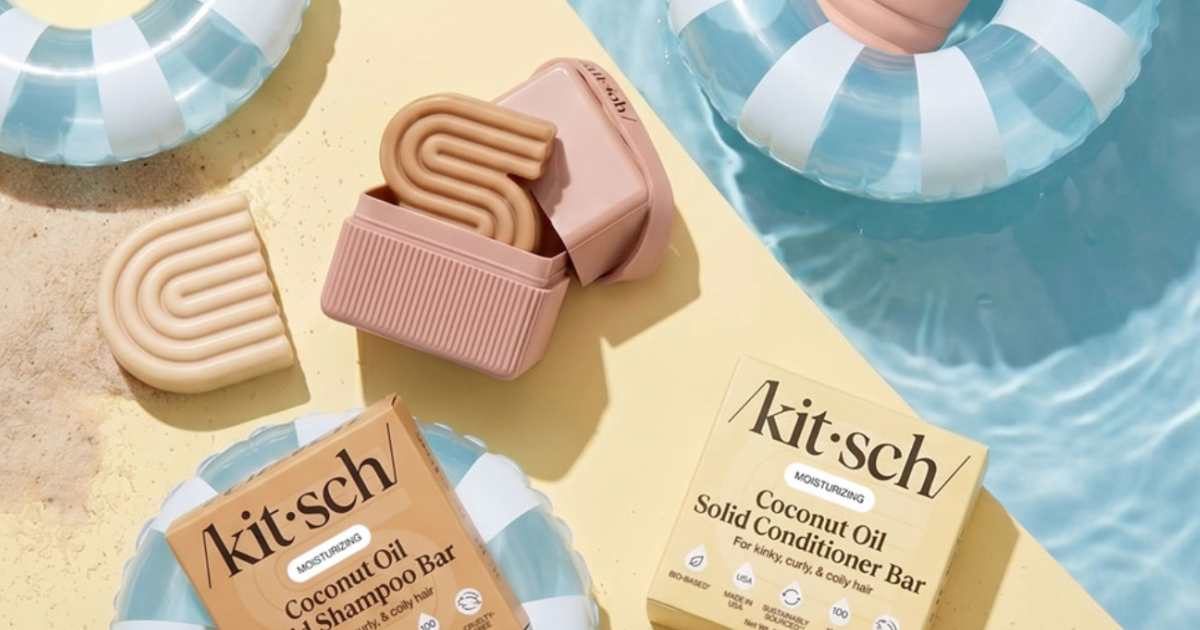
Kitsch is one of those brands that's everywhere right now and most people have no idea who built it or how. In this episode I talk about Cassandra Morales Thurswell, the founder and CEO who started Kitsch in 2010 in her LA apartment with $30,000 of her own savings, making hair ties by hand. What I didn't know when I started researching her is that Kitsch was her seventh business. The first six didn't work. She worked at a cupcake shop, made jewelry, babysat, took night manufacturing courses while working day jobs and kept trying. The seventh time she asked herself one question: what do I reach for every single day that could be better? The answer was a hair elastic. She went door to door to LA boutiques, came back every single day with feedback built into an improved product, and grew Kitsch to over $300 million in sales and 27,000 stores worldwide without ever taking a single dollar of outside investment. This episode is about failure, stubbornness, and what happens when you stop looking for the big idea and start paying attention to your own morning.
-
Welcome back to Fifteenish. This is Leah. Hey friends.
Okay, so there is a brand that I'm personally loving right now, and I was excited to dive in to the founder's backstory.
Now, I'm sure at some point you have seen one of her products, whether it was the Satin scrunchies, the pillowcases or the shampoo bars. Yes, if you can start imagining it, I am talking about Kitsch.
And if you've ever bought anything from them, and I'm sure a lot of you have, you probably didn't really think much about who started it or how. You just grabbed the thing and moved on with your day.
Well, I want to tell you who made that scrunchie, because her story just might inspire you. So Kitsch was started by a woman named Cassandra Morales Thurswell, and she goes by Cassie.
She started Kitsch in 2010 alone in her apartment in Los Angeles with just $30,000 of her own savings, making hair ties by hand. Now that brand is now in over 27,000 stores worldwide. They also have over $300 million in annual sales.
EY named Cassie their National Entrepreneur of the Year, and she has never taken a single dollar of outside investment, not once in 15 years. And here's the part that really got me, you guys, because Kitsch wasn't Cassie's first business.
It wasn't even her second, or third, or fourth. It was her seventh. She had six businesses before this one.
Yes, six, six businesses that didn't work.
1:44
Founderʼs Early Journey
So let's dive in to a little of her backstory. Cassie grew up in a small town in Wisconsin. She was raised by a single mom who was a hairdresser.
And she said she always knew that she wanted to be an entrepreneur. It's interesting to think about people who grew up in a small town, myself included. There's really not a lot of inspiration to pull from.
There aren't a lot of examples of people doing these out of the box things. There's really no obvious path for it. But Cassie, she was just a kid who just knew that she always wanted to build something someday.
Her family ran an orthodontic practice and she actually made retainers there as a kid, which sounds like a little weird detail.
But I do really think it matters because she was learning manufacturing before she really even knew how important that knowledge would help her someday.
She understood how you take materials and you turn them into something that someone actually needs. That instinct was just being built in her really early on.
She eventually moved to LA because she wanted to build a business and LA just felt like that would be possible there. In the meantime, she did what you do when you move to a new city with a dream and not a whole lot else.
She worked at a cupcake shop, she made jewelry, she babysat, she took night courses in manufacturing while working her day jobs.
She was building the skills that she would eventually need, even when she didn't know exactly yet where she was going to use them. But she was just trying things.
She started businesses and as I said, she tried six businesses and she'd watch them not work. And yes, they were six full businesses. They weren't just ideas that she had in a notebook.
There were six actual attempts. Six times she put real energy and real resources into something with the genuine belief that this was the one. And six times she had to watch it not become the thing that she thought it was going to be.
She was making private label jewelry at one point, just working out of her apartment, doing whatever she could to get something going, and none of it was catching it the way that she needed to. But here is what I think is actually really important.
She wasn't just sitting still between those attempts. She was honing her skills. She was learning by taking night courses and manufacturing while working her day jobs.
She was just figuring out how things are actually made, how supply chains work, and how you turn an idea into a physical product that someone can hold in their hands.
So even when the things weren't working, they were kind of working in a different way, you know? She was just becoming someone who knew how to build things. She just hadn't found the right thing to create yet.
4:15
Understanding Failure
So let's shift and talk about failure for a second, because I honestly think we talk about it wrong today. We say things like, oh, failure is just a stepping stone, or every no brings you closer to a yes, or what doesn't kill you makes you stronger.
I feel like all three of those statements have left my lips at some point. And while maybe all of that is true when you look back on it, what happens in the middle of it?
When you're just on attempt number four and it's just not working out, and you have to call your people and explain what happened again, and it doesn't feel like a stepping stone.
It feels like a little confirmation, like maybe that voice in your head that says you're just not cut out for it is actually right. And the brutal thing about multiple failures is what it does to you and makes you feel like it's your story.
Like at some point you've been that person saying, this is the one you guys, this is the business. So many times that even the people you love and who love you start to get a little quiet when you say it again.
It's not like they don't believe in you, but because they've believed in you six times already and they're just not sure what to do with their hope anymore. And you can feel that too, right?
You can feel the shift in the room when you're excited about something new and the people around you are just kind of being careful with their enthusiasm. I do know that feeling. I have started things, many things that didn't work.
I've had that conversation where you have to tell people that, you know, that thing that you were excited about just isn't happening.
And I will say there is something about that kind of disappointment that's different from other kinds because it's not like the business that just fails. It's that picture of yourself that was going to do that thing.
And then you have to push all of that aside and just figure out who you are now and what's next. And Cassie did that six times. But yet she still started again.
I genuinely don't know how she did that because I can't even count how many times I've tried things. I guess this is probably my fourth or fifth time, so I'm getting up there.
But I do think it requires a lot of stubbornness and a whole lot more processing.
6:22
Hair Elastic Innovation
And the thing that led to Kitsch wasn't really a market research report or some trending thing that she spotted. It wasn't even a gap that she identified from the outside.
It was a question that she asked herself, which was, what is something that I personally reach for every single day that could just be better? And that answer for her was a hair elastic.
Yes, the most ordinary, overlooked, taken for granted thing in her bathroom drawer. That thing that nobody talks about, it's not cute, it's not glamorous. It's just there, it's just the thing that everybody uses.
And she said she was thinking about the young woman who would reach for it every morning and she just wanted it to feel like something, to be cute, to be the kind of thing you actually want to use instead of just the thing that's there.
So she sat in her apartment with her savings and she started making them by hand. They were knotted, they were colorful, designed with that kind of attention that honestly nobody had really ever paid attention to hair elastics before.
7:23
Daily Product Improvement
And she picked up the phone and started calling boutiques in LA. She was going door to door asking if they'd carry them. And here is the part that I think is actually more interesting than the whole founding story.
Every single day, she would go back to those boutiques not just to check in, but to ask what's working, what's not, and what would make it better. Then she'd go home, make the changes, and come back the next day with a better product. Every day.
Something Cassie said later on stuck out to me. She said, if you really listen to your customers, they're telling you what the next product is. They're telling you everything.
You just have to actually listen. And if we're being really honest, I think most people, when they get critical feedback about something, myself included, they either get defensive or they get really discouraged.
And both are so natural and both are understandable. But neither of those things is what Cassie did. She went home and fixed it.
And she came back the next day with the fix built in. And then she asked, what else? That is some kind of ego management that most people never develop.
It's that ability to hear your product being criticized and not take it personally, and not protect it out of pride, but just go fix the dang thing. Because the goal was never to be right. The goal was to make something that people actually loved.
And that discipline, that daily willingness to improve, well, that is what built Kitsch. She was just a woman going back to the boutiques every single day with yesterday's feedback built into the product that she had in her hand that day.
9:03
Building Without Investment
She started fulfilling orders from her apartment and she never took on debt that she couldn't handle. She said every decision needed to be sound because every penny counts. And when it's your own $30,000 and nothing else, you get focused fast.
You can't afford to be careless. Everything has to earn its place.
And I think that constraint is actually one of the most underrated parts of the story, because when you have outside money, when there's an investor who believes in you, and you kind of have a little runway that gives you a little room, you also have
the ability to be a little bit more loose and to experiment, and maybe to make bets that don't have to pay off right away. And while that's not necessarily a bad thing, it can mean sometimes that maybe you move before you really understand what the
customer wants, or maybe you scale before you actually nailed the product. Well, Cassie just couldn't do that. Every product had to earn its keep. Every decision had to be sound.
And because she had no one else helping her, she had to listen to the actual feedback from the boutiques, from real customers, from real women picking up that hair tie and telling her what they thought of it. She couldn't outsource that.
She had to be in the room for all of it. And I think that's a huge part of why Kitsch is the way it is today. It slowly grew, the boutiques reordered and words spread through women telling other women.
She kept adding products, she kept listening, she kept showing up with improvements. Her husband Jeremy eventually came on as COO and Kitsch just became what it is.
10:33
Everyday Opportunities
Today, sitting at over $300 million in sales, 27,000 stores, 4.7 million satin pillowcases sold. Yes, I was two of those sales. And again, she didn't have investors, she didn't have outside money.
It was just Cassie, her savings, and 15 years of showing up. And here is what gets me about all of this.
The things that we reach for every single day, the most ordinary, simplest parts of our routine, those are the things that someone, somewhere, actually thought really hard about. Cassie thought about the woman who would use that scrunchie.
She thought about what it would feel like and look like and how it should hold or whether it would leave a crease in your hair. She cared about a thing that the whole world had basically just decided wasn't worth caring about.
I think about what that actually requires. It's not just the hustle or the willingness to go door to door, but it's the caring. The decision to take something that everyone had written off is unimportant, and instead pour real attention into it.
That's honestly a radical thing to do. It also just makes me think about how many opportunities are sitting right in front of all of us that we've stopped seeing because we've just accepted them as good enough.
Cassie didn't make peace with a bad hair elastic. She made a better one with her own hands in her own apartment. Remember, she did this after failing at six other businesses.
I think about what her story really says underneath all of the numbers and all of the stores and all of her accolades. Is that the best ideas are usually really personal.
We've talked about a lot of founder stories that their product or their business came out of a personal frustration.
They come from paying attention to your life, from noticing what's missing in your own routine, or from having the audacity to believe that if something bothers you, it probably bothers other people too.
Maybe you're actually the one who should do something about it. Well, Cassie, she stopped looking for that big idea, and she just started looking at her own morning, and the answer was right there. So here's what I want to leave you with.
Cassie failed six times, but she didn't stop. The thing that finally worked wasn't some big revolutionary product, it was a hair tie made by someone paying close attention to a problem that everyone else stopped noticing.
So what are you walking past every day that you've stopped noticing? What ordinary thing in your life is just worse than it has to be, and you've accepted it because that's how it's always been. Because hey, that might be it.
That might actually be the whole thing. Thanks for being here. I'll see you next week.
Sources & Disclaimer
CNBC Changemakers — Cassandra Morales Thurswell: 2025 CNBC Changemaker (February 2025)
Fortune — Kitsch's CEO Started Out Selling Handmade Hair Ties. Now She Runs a Viral Haircare Brand (July 2024)
CNBC — How Kitsch Founder Cassandra Morales Thurswell Got Women to Switch to Bar Shampoo (February 2026)
Behind Her Empire Podcast — Cassandra Thurswell (Episode 238)
Beautify Tips — Meet Cassandra Morales Thurswell, CEO & Founder of Kitsch (November 2023)
Inc. — 2026 Female Founders 500: Cassandra Morales Thurswell
CEW — 2026 Visionary Honoree Cassandra Thurswell on Creating Kitsch (April 2026)
Confessions of a Female Founder Podcast — Bootstrapped and Booming with Kitsch's Cassandra Morales Thurswell (May 2025)
All facts shared in this episode are based on information available at the time of recording. Any personal reflections, interpretations, or opinions are my own. If anything is found to be inaccurate, I'm happy to issue a correction.