The Tiffany Masterson Story | Drunk Elephant
Tiffany Masterson wasn't a beauty insider. She wasn't a chemist. She wasn't even looking to build a company. She was a stay at home mom in Houston who got a one-star review on a product she was selling, and instead of quitting, she decided to go make something better herself. In this episode, we talk about the moment that started everything, the midnight research sessions that turned her into an expert, the cold email that landed her in Sephora, and what it actually looks like to let criticism redirect you instead of stop you. Also: she started at forty. With no industry experience. And sold for $845 million six years later. This one's for anyone who's ever felt too late, too unqualified, or too stung by a no to keep going.
-
Welcome back to Fifteenish. This is Leah. Hey, friend.
Okay, I wanna ask you something. Have you ever had something that you made or did or sold get publicly criticized?
Like not just a friend pulling you aside with honest feedback, but out there, visible, anyone can read it, criticism that basically said, this isn't good enough, this doesn't work.
Because I think most of us, if we're honest, have a really hard time with that. Like a really hard time. I know I do.
There's something about putting something out into the world and having it not work, that just hits different than any other kind of failure. Because it's not private. Someone saw it.
Someone said something. And the instinct, at least for me, is either to defend it or disappear. To explain maybe why they didn't get it, or maybe decide that it wasn't that good after all, and I just stop.
But today, I want to talk about a woman who did neither of those things.
She got a very public, very harsh review of something that she was selling, and instead of defending it or quitting, she just said, fine, I'll just go make something better myself.
And what she made was Drunk Elephant, which she sold for $845 million just six years after she started. This is the Tiffany Masterson story, and I think it's going to hit a lot of you right where you need it to today.
1:27
Tiffanyʼs Beginnings
So let's back up. Tiffany grew up in Houston, Texas. Her mom was a stay-at-home mom of four, and honestly, that's exactly what Tiffany wanted for herself.
It wasn't meant to be some backup plan. She wasn't going to be settling. She genuinely wanted that life.
So she went to UT Austin, got married, had four kids, and built her whole world around being present for them. And for a long time, that was completely fulfilling.
And then her youngest started school, and suddenly she had all this space in her days that hadn't been there before, and she started getting a little antsy. That's actually her word, antsy. And I love that she said it this way because it's so honest.
It wasn't this big career awakening, it was just antsy. Like something in her was going, okay, what's next? What do I do with all this space now?
She wasn't looking to build this massive business. She was looking for something to do, a little extra money, something to fill the hours, something that was hers. So she sold Arbonne for a while.
And then her brother and brother-in-law got involved in importing a bar cleanser from Malaysia. It was just a little facial soap, and she started selling that too. It wasn't hers, she hadn't made it, she was just the distributor.
But she was curious about it, and she was good at talking about it, so she kept going.
2:39
One-Star Review
And then she got the review. The bar cleanser she was selling got reviewed by Beautypedia, a skincare review site, and they gave it one star. One.
And they weren't kind about it. And around that time, Tiffany started to realize something. The whole structure she was operating in was essentially just an MLM setup.
She hadn't really noticed at first. She just thought she was selling something that she believed in. But as she kept learning and asking questions, the picture got clearer.
She didn't own this. She didn't control it. She was building someone else's thing on a foundation that she couldn't actually trust.
Okay, so one star review, MLM structure, both hitting at the same time. For most people, that's maybe the moment you quit. You pack up and you tell yourself it wasn't meant to be, and you go back to whatever it was you were doing before.
But here's what Tiffany did. She called her brother-in-law and said, I think I can do this myself. Not just a cleanser, but a whole line, a whole routine, something that actually does what it says it's going to do.
And he said yes. He ended up investing $300,000. I think that speaks volumes, but this was just the beginning of everything.
And here's the part of the story that I love so much.
Because Tiffany didn't go back to school, she didn't hire a team of experts, she didn't do what a lot of us might do, which is assume that because we don't have credentials, then we're not qualified to figure it out.
4:03
Skincare Revelation
But she started learning, like obsessively. It was the kind of learning that happens when you actually care about something versus when you're just supposed to care about it. She was staying up until midnight reading about skincare ingredients.
She wasn't skimming articles, she was actually going deep, figuring out what each ingredient does, why it's in the formula, whether it's actually helping your skin or just making the product easier to sell.
She was calling dermatologists, beauty editors, skincare buyers, estheticians, really anyone who knew more than she did and was willing to have the conversation. And what she kept finding over and over again was the same thing.
Most skincare products were full of ingredients that weren't there for your skin. They were there for the formula. Fragrance because it smells luxurious.
Dye as well because color makes something look premium. Silicone is because it gives that silky slip that makes it feel like something's happening. Drying alcohols or essential oils, sodium lauryl sulfate.
She called them the suspicious six. And here's what got me about this part. When she figured it out, it wasn't just a business insight, it was personal.
She had spent her entire adult life thinking that she had problem skin. Trying product after product, spending money, getting frustrated. And the answer wasn't a better product.
The answer was fewer ingredients. She had been solving the wrong problem the whole time. The industry had just been selling her the problem and the solution simultaneously.
And when she realized that, she got mad, like good mad, the kind of mad that makes you want to actually do something about it. So her thesis ended up being almost annoyingly simple. What if you just removed them?
What if you built a line with only the ingredients that actually do something for skin and left out everything else that was just there for marketing?
What if the reason everyone thought they had sensitive skin wasn't that their skin was sensitive, but that they had been slowly sensitizing it for years?
She partnered with a chemist to develop the formulas, and by the time she was in that room, she was genuinely one of the most knowledgeable people there. Not because she had a degree, because she had cared enough to go find out.
She'd come to all of it without assumptions, without this is just how it's done thinking that happens when you've been inside an industry too long. She designed the packaging herself, matte white with bright, joyful pops of color.
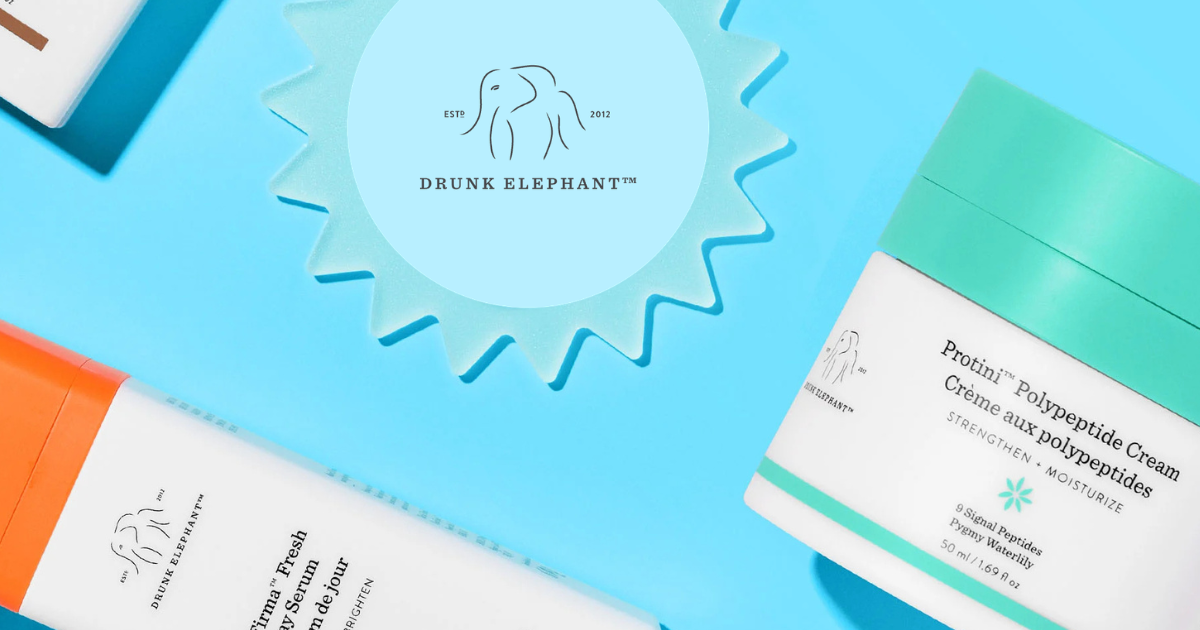
She said it at the time there was tons of color and whimsy and makeup, but skincare was all very serious and beige. She wanted it to feel happy on a bathroom shelf, and she named it Drunk Elephant.
After the myth that elephants get drunk eating fermented marula fruit, and marula oil was going to be one of her hero ingredients. She also said she picked up the name partly because it would let her stay anonymous.
If it was called Drunk Elephant, she could stay behind the brand instead of in front of it. Her grandma called it the most asinine thing she had ever heard. Her best friend hated it.
Her mom didn't like it either. Her publicist wanted to run a $30,000 focus group, which Tiffany was pretty sure would just come back telling her to change it. So she didn't do the focus group.
She went with Drunk Elephant, and I love her for that.
7:09
Sephora Launch
In 2013, she soft launched her own website just to get feedback, just to see. She was sending samples out in gorgeous acrylic boxes filled with confetti, she was pitching beauty editors, and she wanted to get into Sephora.
That was the goal from day one. She had told her brother-in-law before a single product shipped, we're going to get into Sephora, build the brand, and then sell it to one of the big players. She said that out loud before she had anything.
I really love that kind of confidence. So here's what she did to get in front of them. Are you ready for this?
She guessed email addresses. She literally tried every combination of first and last names that she could think of for Sephora contacts until one went through.
And then she wrote, I have this brand called Drunk Elephant, here's the philosophy, here's why it's different. And Sephora wrote back. They asked which category, clean or clinical?
And Tiffany said, neither. It's a new category, non-toxic. Gosh, I love that answer so much.
The following year, she went to a trade show, she got in front of their reps and sent them home with samples. Two weeks later, they called. Drunk Elephant launched in Sephora in January 2015.
And then things moved really fast. Within two years, her TLC Sakura Baby Facial became the number one skincare line product on sephora.com. Number one and the sixth best selling product on the entire site.
In 2019, six years after the launch, she sold Drunk Elephant for $845 million. Okay, so there are so many things I could pull from this story. I could talk about trusting your gut when everyone around you is telling you that you're wrong.
And she had a lot of people telling her she was wrong. The name, the packaging, the strategy of going exclusively to Sephora instead of sprinting wide. All of it got questioned by people who supposedly knew better.
I could talk about the outsider advantage. How not knowing the rules meant she didn't feel obligated to follow them. How coming in fresh actually let her see things that people inside the industry had stopped seeing years ago.
But the thing that I want to come to is that one star review. Because she didn't get defensive. She didn't argue that the reviewer was wrong or that the people just didn't get it.
She looked at it and thought, they're right. This isn't good enough. And I'm going to make something that is.
Now, I don't know about you, but that is not my natural first response to criticism. If I'm being really honest, my first response is either to over explain or spiral.
To find the reason that it wasn't fair or to let it convince me that maybe I'm not cut out for this. And neither of those things are helpful. Neither of those things move you forward.
And Tiffany, she let it move her forward. She let it redirect her. And I think that's actually a skill, not a personality trait, a skill.
The ability to hear something hard, sit with it and then use it as information instead of as the truth.
10:09
True Confidence
I also want to say something about the expertise that she built because I think it would be really easy to look at what she accomplished and chalk it up to luck or good timing or hitting the right trend, but that's not what happened.
By the time Drunk Elephant launched, Tiffany had spent years becoming genuinely one of the most knowledgeable people in clean skincare. She cared deep enough to go find out why.
All those midnight research sessions, dermatologist conversations, deep dives into ingredient decks that most consumers never think twice about. She built the expertise before she built the brand, and I think that's why it held.
I think that's why editors, when they asked her questions, she had real answers. That's why she could hold her ground. The confidence wasn't just a personality thing.
It was earned. She did the work first. How often do we rush to launch something before we actually have done the work?
Before we can actually defend it, not just describe it. Tiffany spent years in the learning phase before she spent a single dollar on the business. And I don't think that's a detour.
I think that is the business. And here's the part I can't let go without saying out loud. She started at age 40.
40 with no network in the industry, no investors lined up, no clear roadmap, just a problem that she understood deeply and a willingness to look like a beginner while she figured out how to solve it.
She said something once that I think about whenever I feel like I'm too late to something. She said she would have never tried if she'd known how hard it would be, but she didn't know.
So she kept going one thing at a time, convinced that once people actually tried the products, they'd get it. And here's the thing about that. Her brother-in-law, yes, he put $300,000 into this.
Her brother eventually came on as president. These were real relationships, real money, real stakes. There was no version of this where she failed and nobody noticed.
That is not something small to carry, but she carried it anyway. She wasn't fearless, but she had done enough work to actually believe in what she was building. That belief wasn't blind.
So if you can take away something for today, I want you to hear that the businesses that actually work, the ones that build real communities and real loyalty and real meaning, they almost never start with that perfect strategy.
They start with something true, something personal, something the founder was almost too scared to share because it felt too close.
Tiffany's whole company started with her own frustration, her own skin, her own decades of buying things that didn't work and finally figuring out why. She built the whole thing from the most personal place and I think that's exactly why it worked.
So if you're sitting with something right now that maybe didn't work, maybe it was a product that flopped or a pitch that got rejected, could have been a review that stung more than you expected. What if that's not the end of your story?
What if it's just the part where the real story begins? What are you building that someone told you wasn't good enough? What are you holding back because you're waiting to feel more ready, more qualified, more sure?
What if that one-star review could turn into something bigger? Tiffany was a stay-at-home mom in her 40s who got that one-star review on someone else's product and then she decided to do something about it. Thanks for being here.
I'll see you next week.
Sources & Disclaimer
Fashionista — How Drunk Elephant Founder Tiffany Masterson Went From Stay-at-Home Mom to Beauty Mogul (March 2018)
Glam — Drunk Elephant Founder Tiffany Masterson's Journey to Becoming a Beauty Mogul (March 2023)
NUVO Magazine — Tiffany Masterson on Drunk Elephant, Gen Alpha's Essential Beauty Brand (April 2024)
How I Built This with Guy Raz — Drunk Elephant episode (January 2024)
Wikipedia — Drunk Elephant entry
All facts shared in this episode are based on information available at the time of recording. Any personal reflections, interpretations, or opinions are my own. If anything is found to be inaccurate, I'm happy to issue a correction.