The Alice Bugeja Story | mileoff
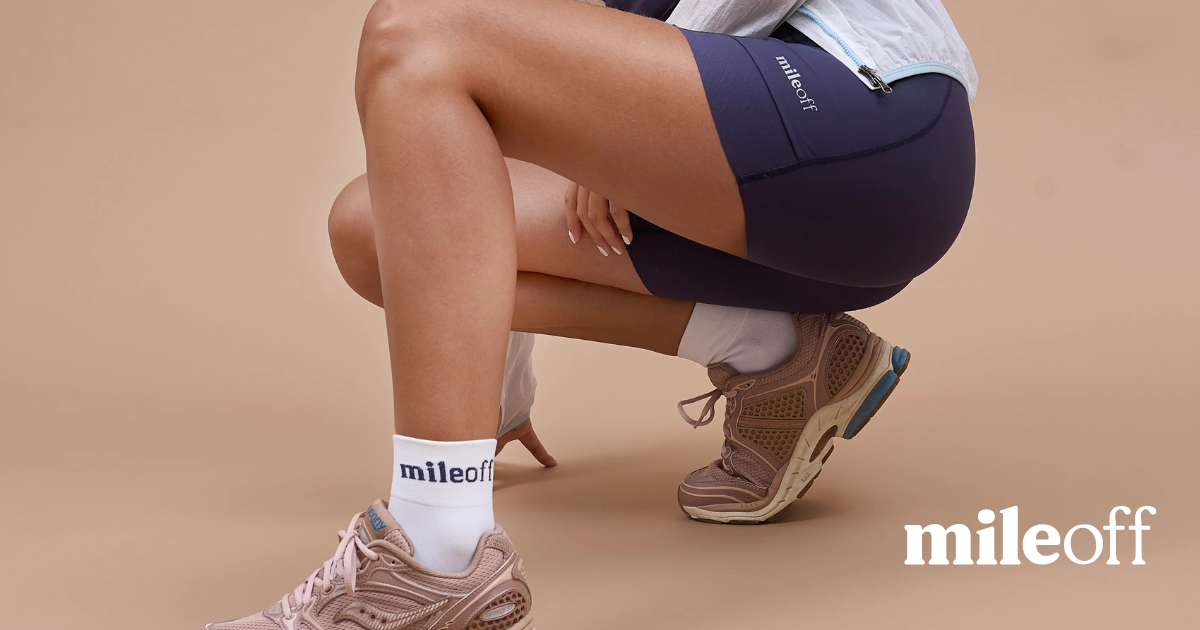
There's a voice most of us have. The one that says not yet, not you, not this. And today's founder built an entire brand around proving it wrong. Alice Bugeja is the solo-female founder of mileoff — a women's running brand she built completely from scratch, self-funded, while working full time at Dyson, in a city where she barely knew anyone. She spent two years building in secret before anyone knew her name and launched on International Women's Day March 2025 to a completely sold out first drop. In this episode we talk about the history behind the name mileoff, Kathrine Switzer and what actually happened at the 1967 Boston Marathon, and why the most powerful thing Alice did wasn't design a product, it was letting people in. This one's for anyone who's been dreaming about something for a year without actually doing the hard part yet.
-
Welcome back to Fifteenish. This is Leah. Hey friends.
So I am curious, how many times have you talked yourself out of something before you even started? Now, I'm not talking about rejection or failure. I'm talking about the thing that you actually never started.
Maybe it was a little voice in you that said, nah, that's not really meant for you. You're not the person that can pull it off. That's for other people.
I think we all have some version of that voice, and I think it shows up in the smallest places or ways.
Whether it's signing up for a race, pitching a client, launching a product, maybe quitting a job to go build the thing that you actually care about. What I find so interesting is that that voice isn't always that incredibly loud or anything.
It doesn't always say you can't. Sometimes it just says, you're not really ready, or at least not yet.
Maybe it's best to wait until you're more ready, or even it could be something like, maybe someone else is already doing this better, so you might as well not try it.
The founder I'm talking about today built an entire brand around shutting that voice up. Her name is Alice Bugeja.
She is the founder of Mileoff, which is a women's running brand that she built from scratch, completely self-funded while working a full-time job in a city where she knew almost nobody.
And not to mention in an industry dominated almost entirely by men. This is the Alice Bugeja story. And I think it's going to hit you right where you need it today.
Alice grew up in the UK.
1:32
Aliceʼs Path to Mileoff
She spent some time in the US as a kid. And from a really young age, she had this entrepreneurial energy that she didn't quite know what to do with. She always had little side projects going and always knew she wanted to build something real one day.
She just didn't know what. She studied business and Spanish at the University of St. Andrews in Scotland.
She graduated with first class honors, by the way. And then she went into a graduate program at Dyson. Dyson is one of those companies that is just genuinely impressive to work at.
And she spent nearly five years there, rotating through sales, e-commerce, marketing, working across the UK, Spain, and eventually landed in Dubai as a marketing manager. On paper, she was doing everything right.
She had this great job, lots of international experience. It felt like real career momentum. But the whole time, that thing that she always wanted, you know, building something of her own, was still there, still waiting.
And then Dubai happened. She had talked about how moving there changed everything. She was suddenly surrounded by people who were going after big things.
She was around founders and dreamers. And the energy of the city made her feel like maybe she could go after her dream too. Now, running was already a huge part of her life.
She ran her first 10K, then a half marathon, then longer. She became part of Dubai's running community. She was leading runs, making friends through it.
And the whole time she was running, she kept noticing the same thing. The gear was terrible. Shorts with no pockets.
Hydration vests designed for a male body that chafed in every wrong place. Brands that had slapped a logo on a generic product and called it women's running wear.
And when she started digging into why that was, she found something that stopped her in her tracks. Almost every major running brand in the world was founded by a man.
And among the newer and emerging brands, yeah, not a single one was solo female founded. That was the moment. That is when Alice knew exactly what she was gonna build.
I have to tell you about the name before we go any further because I love it so much and I think it tells you everything we need to know about who Alice is.
3:28
Mileoffʼs Bold Vision
So 60 years ago, women were not allowed to run marathons. Yes, I literally said they were not allowed to run. Now I don't mean this in a vague cultural kind of way.
I mean, literally, there was a rule. Women were not permitted to complete in races longer than a mile and a half.
And in 1967, a 22-year-old journalism student named Kathrine Switzer signed up for the Boston Marathon using her initials KV Switzer, which was just how she always signed her work.
She had no idea it would become one of the most photographed moments in women's sports history. About two miles into the race, a race official named Jock Semple spotted her and realized she was a woman. Let me just set the scene for you here.
He jumped off the press bus. He ran after her and screamed, get the hell out of my race and give me those numbers. He then grabbed her by the shirt and tried to physically pull her off the course.
Well guess what? Kathrine Switzer finished the race anyway, in four hours and 20 minutes. In those photographs of a man in street clothes, trying to drag a woman off a marathon course while she kept running went around the world.
Women weren't officially allowed to enter the Boston Marathon until 1972, just five years after Kathrine proved they could actually run it. So the thing that Alice built her whole brand around, are you ready for it?
On the premise that women were told they couldn't, that their bodies weren't built for it, that they would get big legs and grow hair on their chest and their uterus would fall out. I am not making that up. I wish I was though.
Those were the actual medical arguments used at the time. But women, well, they ran anyway and they kept running. And now women make up nearly half of all marathon finishers in the US.
The name Mileoff comes from the idea of being seen from a mile off, being bold, being visible, showing up for things that people told you weren't possible. That message for women hasn't gone away. It's just gotten sneakier.
No one says women can't do that out loud anymore. Well, most of them don't, but it's still there, buried in the way that certain rooms are set up and who gets funded and who doesn't, in eyebrow rays when a woman walks into a pitch meeting.
You have to read between the lines now, but the lines are still there. And Alice built a brand that says, We see you from a mile off. I've got my running vest ordered by the way.
I'm going to stand behind that message all day long and wear it proudly crossing the finish line. Alice has also talked about something that really got me.
She said that learning to run is actually the perfect analogy for what it feels like to be a woman going after something big. When you first start running, you genuinely cannot imagine running a 5K. That was definitely me at one point.
And then you do it. You actually hit that 5K. And then you can't imagine hitting a 10K.
But then you do that too. And slowly that thing that felt completely out of reach becomes the thing that you're doing. But only if you start, only if you don't let that voice talk you out of it before you even lace up your shoes.
Let me repeat that for you. That thing that felt completely out of reach becomes the thing you're doing only if you start. And only if you don't let that voice talk you out of it before you even lace up your shoes.
Friends, as you know, I'm training for a marathon right now, and I felt those words in my entire being. Here's where Alice's story gets really real.
7:16
Building a Community Brand
She didn't just have this idea and quit her job the next day. No, she spent two full years building Mileoff on the side while still working full-time at Dyson.
Two years of mornings before work and nights after it, two years of researching factories, designing products from scratch, testing fabrics, perfecting the fit, and she was doing this completely alone. No co-founder, no investors, no team.
Now, she didn't just buy off the shelf products and put a logo on them, which by the way is exactly what most activewear brands do. She started from zero.
She spent months obsessing over every detail, the pocket placement, the seam positions, the silicone grips that stop your shorts from riding up, the hydration vest fitted to an actual female body.
She said that a woman's body isn't an afterthought for Mileoff. It's the first thing that they think about.
And all of this while holding down a demanding corporate job, while also living in a city that she was still getting to know, and while doing everything herself. And then she quit.
She took what she called the biggest risk of her life and left Dyson to go all in on Mileoff. Completely self-funded, completely solo. She launched on International Women's Day, March 2025, and her first collection sold out.
What I find really fascinating is that she actually built community before she even had a product. She documented everything, every step of the way, from visiting her suppliers in China to packing orders herself on the floor.
She brought people along for the ride, and she showed the real, real version. The uncertainty, the excitement, the terrifying parts.
And people connected to her story so deeply that by the time launch day came, they weren't just buying a running vest. They were buying into something that they had been following and rooting for.
And I think that's one of the most important things any founder can understand right now. We are living in a moment where people are completely exhausted by this curated, here is my perfect version of this brand. They've just seen so much of it.
They can smell it from a mile away and then they scroll right past it. But what actually stops people? Well, it's the real thing.
The founder packing orders at midnight. The sample that came back wrong three times. The moment you almost quit and didn't.
That's what people lean into. Not because they want to watch you struggle, but because it makes them trust you. It makes a product mean something.
When you know that someone gave up and pushed through to make a thing, you're not just buying the thing, you're buying the story. You're buying the proof that it mattered enough to someone to actually finish it.
Alice didn't have a PR budget and she didn't have a team or a big launch campaign. What she had was two years of showing up honestly and letting people in.
And that turned out to be worth more than any ad spend because by launch day, her community didn't feel like customers. They felt like they were part of it.
And the brands that win right now, I mean really win, not just spike and disappear, are the ones where you know the person behind them, where the story is inseparable from the product, where buying it feels like an act of connection, not just a
transaction. Someone who bought a second vest, wrote about it later and said, she didn't buy it out of need, she bought it out of that connection. That is what Alice built.
Okay, so I have been thinking about Alice's story and honestly with a lot of things this week, and I want to share what keeps coming up for me.
10:40
Start Despite Doubt
Alice didn't have a head start in any of this. She wasn't a fashion designer, she wasn't from the fitness industry, she had no investors, no co-founder, no team.
I mean, she was really just a marketing manager at a tech company who ran in her spare time and she got frustrated that the gear wasn't good enough. And then she took that frustration and thought, hmm, what if this is the thing?
What if the problem I keep hitting is exactly the problem I'm supposed to solve? That's it. That question and that thought is all it took.
Now, how many times have we done that in reverse? How many times have we hit a wall, felt the frustration and then just accepted it? We bought the vest that chafes and moved on.
We stayed in the job that doesn't light us up, talked ourselves out of the thing we actually want to build because it feels too big or we don't feel qualified enough or we can't quite imagine how we get from here to there.
What I appreciate about Alice and her journey, she said that slowly we can make change happen. Not all at once, not with a huge giant leap, but by having confidence to go after the things we think are just out of reach.
Whether that's going for your first run, signing up for a marathon or going after your dream job. One step, then another, then another. That's exactly what running teaches you, right?
You don't run a marathon on day one. No, you run five minutes. And then ten.
And then you build on that momentum. But you have to start. I know that most of us want to know that it's going to work before we commit.
I get that. We want that guarantee before we take the risk. Alice didn't have that.
She just had an idea and her frustration and the belief that it was worth going after.
And now there's a community of women all over the world running in mile-off gear that was made specifically for them by a woman who ran, who got frustrated, who didn't wait to feel ready.
And I also keep thinking about Kathrine Switzer finishing that marathon in 1967 with a race official's handprints on her t-shirt. She didn't stop. She kept running.
And five years later, women were officially allowed to enter the race. And now nearly half of all marathon finishers are women. She didn't change it all at once.
She just refused to stop. Alice is doing the same thing, just on a different course. I think about that little voice that I talked about at the beginning, the one that says, not yet, not you, not this.
And I think Alice is proof that the only way to quiet that little voice is to start anyway, to lace up and go, to build the thing even when you can't see the finish line. Women couldn't run marathons 60 years ago. Now we do.
Women didn't have running brands built for them. Now we do. What's the version of that in your life that you've been waiting for someone else to build when really it's been yours to go after all along?
Whatever that thing is for you, the business, the race, the pivot, that leap, what are you waiting for? We were never told we could. We just went and did it anyway.
Thanks for being here. I'll see you next week.
Sources & Disclaimer
Hypebae — Why Mileoff Makes Running Gear for the Girlies (July 2025)
Emirates Woman — How Alice Bugeja is Redefining the Activewear Space with Mileoff (September 2025)
Alice Bugeja — LinkedIn and TikTok (@aliceroserunner)
Sky Sports News — Kathrine Switzer: First Woman to Officially Run Boston Marathon (December 2021)
Wikipedia — Kathrine Switzer entry
Running USA — Women's marathon participation data
All facts shared in this episode are based on information available at the time of recording. Any personal reflections, interpretations, or opinions are my own. If anything is found to be inaccurate, I'm happy to issue a correction.