The Jen Rubio Story | Away
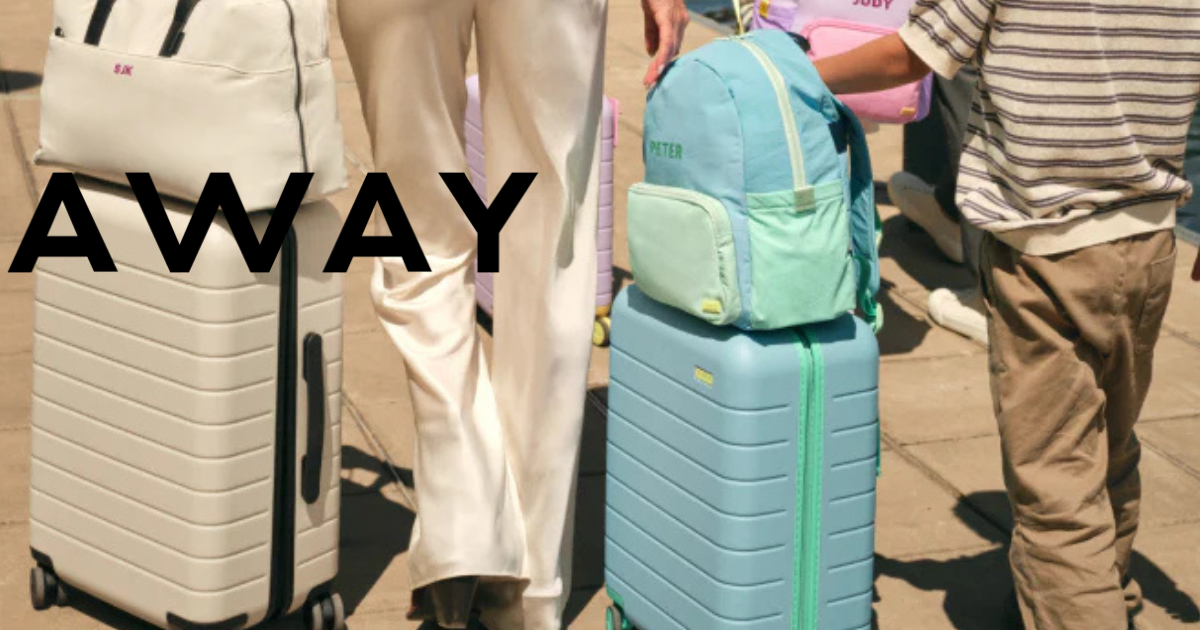
Jen Rubio was born in the Philippines and moved to New Jersey at seven years old. She arrived in a classroom where she didn't look like anyone around her, got placed in ESL classes, and spent years hiding her accent, her food, her whole self — just trying to belong. In this episode of Fifteenish, I'm not talking about the suitcase or the billion dollar valuation. I'm talking about that classroom. And what it costs a person to flatten themselves to fit a room that wasn't built for them — and what gets built when they finally stop. Jen went on to co-found Away, grow it to a $1.4 billion valuation, and step in as CEO for the first time ever — eight months pregnant — when the company needed someone who actually believed in what it was supposed to be. This one is about visibility, belonging, and what becomes possible when someone finally goes first.
-
Welcome back to Fifteenish, this is Leah. Hey friends, before I get into today's episode, I wanna make something really clear, because I really do mean this. This podcast is for everyone, every woman, every background, every color, every story.
I wanna be really clear about that, because I genuinely believe it.
I believe that every single person deserves to be seen for who they are, not what they look like, not where they came from, not what language they grew up speaking, or what food they ate, or whether their name was easy for other people to pronounce.
Who you are is enough. Who you are is the whole thing.
And I think about a lot of this as I research these episodes, because the more founders that I study, the more I notice many of the extraordinary stories belong to women who were told, implied or not, that the room wasn't built for them.
Women of color, immigrant women, women who grew up without money or connections, or even just having a single person in their life having done what they're trying to do. But yet, they built it anyway, often without anyone watching or rooting them on.
And this matters so much. And today's episode is about one of those stories. Have you ever thought about what it feels like to walk into a room and not see yourself in it?
I mean, the feeling of looking around at who's doing the thing that you want to do, and realizing none of them look like you or sound like you. Maybe they don't come from where you come from.
And then you're left wondering if that means that thing isn't actually for you. I know personally, I think about that feeling more than I might even be aware of. And I think a lot of the women listening to this right now know exactly what I mean.
Today, I want to talk about a woman named Jen Rubio. She is the co-founder of Away, which is the luggage brand that hit a $1.4 billion valuation. Now, the story I want to focus on is before she even launched the suitcase.
I want to talk about a classroom in New Jersey, and a seven-year-old girl who decided in that classroom exactly who she was going to become. So backing up, Jen was born in the Philippines. When she was seven, her family moved to New Jersey.
In the Philippines, she had the best schools and the best teachers. She felt capable and confident and like herself. She knew who she was.
And then she ended up in a New Jersey classroom, and none of that stuff that she felt confident about before traveled with her. She had an accent. She ate different food.
She got placed in ESL classes because of the way she spoke. And overnight, the kid she had always known that she was, well, it didn't fit anymore. I want you to really picture that.
You're seven years old. You were thriving. You were at a good school.
You were you. And then you cross an ocean, and suddenly the very things that made you feel capable, your language, your culture, your food, your voice, are the things that mark you as less than.
Because the room you ended up in doesn't have space for those things yet. And you're only seven years old. You don't have words for any of this.
You just know that it feels wrong. You just know that something about you is making other people uncomfortable. And when you're seven and you're doing something that's making people feel that way, well, you stop doing it.
You adapt or you shrink. You figure out how to take up less space. Jen asked her mom to get a speech coach to help her get rid of her accent.
She read constantly. She watched hours of TV. She studied the way that people around her talked, moved and just existed.
And she wanted to mirror it. She wanted to disappear into the majority so completely that nobody would clock the difference.
This is really important to talk about here, because I think we talk about adapting like it's a common thing, like it's just what you do to survive.
It's smart, but it actually requires that you spend a significant portion of your energy becoming someone else. It's energy that isn't going towards creating or building or figuring out what you actually want.
Instead, it's going towards the performance of belonging. It is being used towards making everyone around you more comfortable with your presence. That is exhausting, and it starts young, way younger than it should.
I remember specifically growing up and constantly hearing that I was too loud or too annoying, and it probably started around the same age as Jen.
And so I started believing those things, and I shrank myself down, and even 30 years later, that little voice of, just be quieter, no one cares what you have to say, you're just annoying, it still pops into my head.
That stuff sits with you for a lifetime. And for Jen, changing into someone else worked. By high school, she was in all honors classes.
She fought really hard to finally feel like she belonged.
5:10
Suppressed Ambition
But years later, Jen said, now as the co-founder of a billion dollar brand, that growing up, she never knew anyone in a creative or entrepreneurial field who looked like her. She never knew that what she'd eventually build was even a possibility.
That option didn't exist in her mind because she had never seen it modeled by anyone who shared the same experience as her. She originally wanted to be a lawyer because it was a path that immigrant families understood.
It felt safe and even respectable. Something that you could explain at a family dinner without anyone asking follow up questions. You know, that kind of pressure in her family didn't come from a bad place.
They weren't being mean, it just came from love. It came from parents who crossed an ocean so their daughter could have a better life. They just had a very clear picture of what a better life looked like.
And that picture included stability, respect, and a title that the community recognizes. It's not a small thing they were asking for, it was everything they worked for.
And so Jen, as a child, the smart, capable, curious child who has already taught herself to hide her accent and eat different food at home and in public, that child also learned to tuck away the dream a little further down, to stop reaching for the
thing that didn't really have clarity yet, and instead to pick up a path that already exists. How many extraordinary things don't get put into this world because of that exact dynamic?
It's not that the person wasn't capable, the idea was there, but the possibility never fully formed because they had spent so long in rooms where nobody looked like them and was doing the same thing. Visibility is infrastructure.
I really believe that. The reason some people start isn't just courage or grit or the right idea at the right time, it's because somewhere at some point, they saw someone who looked a little like them doing it, and that image made it real.
And that's why when someone steps out into the light, when they become one of the first, it cracks something open. It makes the possible visible. It paves the path in a way that nothing else can.
Being first is often the hardest, most courageous thing a person can do because it's not proven yet. There's no roadmap. No one ahead of you saying, it works.
You're just out there doing the thing, not knowing if it's gonna hold. And yet that single act of going first changes everything for everyone who comes after. I think about this in my own life.
I grew up in a world where the founders and CEOs and the people building these incredible things were mostly men, mostly a certain kind of man.
Looking back at my real estate career, the top selling agents or the top teams, the people holding the awards at the end of the year, they were almost always men.
And I couldn't visualize myself at the top because that just wasn't the story I was being fed. No one handed me that image. And without the image, it was really hard to build that belief.
There is always just this feeling, like certain spaces weren't quite for me. Like I'd have to work twice as hard just to be taken seriously in a room where some people just already belonged.
And I think that's why I started this podcast because I keep finding these women, these completely amazing, pretty much normal women who were doing these incredible things and nobody was talking about them.
And I thought, if one person hears this and thinks, oh, she looks a little like me or she sounds a little like me, maybe I could, well, then it's worth it. That's the whole point of why I'm doing this.
8:40
Founding Away
And going back to Jen, well, she didn't have that image. She had to create the whole thing in the dark, without a roadmap, without a model. She dropped out of Penn State three credits shy of graduating to take a job at Neutrogena.
Her parents, let's just be real, were not thrilled. She followed Curiosity anyway, and she found her way to Warby Parker, then to London, then to an airport in Zurich, where her suitcase broke open on the floor.
And she called her friend Steph and just started venting. Why is good luggage so expensive? Why does the affordable stuff fall apart?
Why is there no brand that actually gets how women travel?
That conversation became Away, a luggage brand that she co-founded from scratch, built into a cultural moment, and grew to a $1.4 billion valuation, which is now one of the highest funded female-backed startups in history. But Jen was never the CEO.
That was Steph's role. Jen was the brand, the creative, the vision, and for years that worked really well.
Well, until the pandemic hit and the world stopped traveling overnight, and sales dropped 90% and leadership cycled through, and the company that she'd pour everything into was suddenly in real trouble.
And when it needed someone who actually believed in what a way was supposed to be, someone who had been there from the very beginning, Jen stepped in as CEO for the first time ever, eight months pregnant.
That is who the seven-year-old in the New Jersey classroom grew up to be. Fearless.
10:16
Belonging and Brand
Looking back to all the times that Jen had to hide her true self in the classroom and how all of her energy went into becoming someone that she wasn't.
Imagine spending years of your life trying to fit in, that you flatten down the parts of you that feel too visible or too different or too much. Jen eventually stopped hiding.
She followed curiosity instead of that safe path, and when she dropped out just three credits shy of graduating and her parents were panicking and she said, I know, but this job feels right.
When she moved to London alone, when she called her friend from an airport floor covered in her own belongings and said, I need to build something. The hiding taught her things. I actually think that's true.
I think it taught her how to read a room, how to understand what people need before they say it, how to build something that makes people feel seen and valued and like they belong, because she knew deeply what it felt like not to.
You don't build a brand around the feeling of belonging unless belonging has meant something personal to you.
That same energy but redirected, built a company, because the thing about people who have had to work hard just to be seen is that they understand at a cellular level what it feels like to be invisible.
And they build things that make people feel found. To me, away was never really about the luggage.
I think they sold a feeling, the feeling of being someone who moves through the world with intention, who travels not to collect miles, but to actually experience something, a belonging to a life well lived.
And I don't think it's an accident that the woman who built that brand, spent her childhood desperately seeking to belong somewhere. Her experience matters.
12:03
Innate Founder
I want to rewind here for a second and go back to when Jen was young. She was probably around eight years old.
A kid down the street opened a lemonade stand, and instead of setting up her own, she went to her dad, asked for $20 so she could buy him out. Then she made him work for her. She called it her first merger and acquisition.
Eight years old and she was already narrating her own story like a founder, already seeing the world in that way.
Even in a classroom where nobody looked like her, even in a family where the safe path was medicine or law, some part of her was already building something. She just didn't have the language for it yet.
And gosh, that part gets me because it wasn't the big billion-dollar valuation or the big headlines that made her a founder. She already was one.
Underneath all that hiding, the speech coach, the hours of TV, the performance of just trying to fit in, there was this kid buying out the lemonade stand and calling it a merger. That part of her brain never turned off.
It was just waiting for the moment that she finally gave it permission to run.
13:14
Drawing Your Map
I wonder sometimes what would have happened if she had seen one person, just one, one Filipina American woman building a brand, taking a risk, doing something that didn't fit the template. Would she have moved faster? Would she have started earlier?
Would she have spent less energy hiding and more energy creating? Maybe, maybe not.
But I do think about the women listening to this right now, who were in that classroom, who are looking around and not seeing themselves, who are convincing themselves that the thing they want isn't for people like them.
That the path doesn't go where they want to go. And I think about how long Jen herself probably believed that.
It's not like she woke up one day at seven years old in a New Jersey classroom and said, fine, I'll just build a billion dollar company without a real plan or someone to follow. She spent years trying to become someone that the room would accept.
She studied law. She took a safe path. She didn't know there was another option.
But then somewhere along the way, something shifted. The curiosity got louder than the fear. The thing that she actually wanted got harder to ignore than the thing that she was supposed to want.
Let me say that again. The thing that she actually wanted got harder to ignore than the thing that she was supposed to want. And she moved towards it.
Imperfectly, one small follow the curiosity decision at a time. Until she built something that nobody looked like her had built before.
And if you're sitting there right now, thinking a path doesn't go where you wanna go, Jen Rubio is the answer to that. It does, and she proved it. She didn't always know it was possible, but she built it anyway.
The map didn't exist, so she drew one. And now she's the person that the next generation of Filipina American girls gets to point to and say, her, I wanna do what she did. That is the whole thing.
That is why this matters. So I wanna ask you something before you go. Not a rhetorical question, a real question.
So I want you to really think about this. What is the thing that you've been telling yourself isn't for you? What is the path that you've decided doesn't go where you wanna go without actually testing whether that's true or not?
What would you do differently if you knew, really knew that people like you had done it before? Hey, you found this show. You're listening to this episode right now.
That means something. Every episode is one more proof point that it's possible. Every founder I cover is one more woman who did the thing before you.
And Jen Rubio, a Filipina immigrant girl from New Jersey, who didn't even know this whole entrepreneurial world existed, is just one of the most powerful stories yet. So, friend, just remember the room is bigger than it looks from the outside.
Thanks for being here. I'll see you next week.
Sources & Disclaimer
Wikipedia — Jen Rubio entry
CNN Money — The Founders of Away Changed the Luggage Industry After a Travel Mishap (October 2017)
Asian Journal News — Meet the Filipina Who Turned a Suitcase Filled With Dreams Into a Billion-Dollar Reality (October 2025)
Grokipedia — Jen Rubio entry
Forbes — Jen Rubio interviews and features
Blank Brand — Women to Watch Vol 1: Jen Rubio's Community-First Brand Strategy (September 2025)
Medium / The Founder Stories — Meet Jen Rubio, Who Created the Perfect Suitcase at Away
All facts shared in this episode are based on information available at the time of recording. Any personal reflections, interpretations, or opinions are my own. If anything is found to be inaccurate, I'm happy to issue a correction.