The Emily Tout Story | Mighty Slice
I found today's founder the way I hope more founders find each other... completely by accident. Alice Bugeja, the founder of mileoff, was out on a run when she spotted a woman wearing her gear, ran up to introduce herself, and discovered she was talking to a founder. That founder was Emily Tout, co-founder and CEO of Mighty Slice. Alice even posted a reel about it. And I went down a rabbit hole immediately.
Emily's story is one of the most honest ones I've told on this show. She wanted to be a lawyer since she was eight years old. She went to the London School of Economics, pursued space law, got the career — and then realized it felt completely wrong. What followed was an identity crisis, a brother who was obsessed with entrepreneurship podcasts, a powerlifting habit that rewired how she thought, and a very simple question she couldn't stop asking: why do protein products taste so terrible? Mighty Slice started in her kitchen in 2021. In January 2023 the team was still hand-making every single cheesecake themselves. By the end of that year revenue had grown 1,900%. They're now in Asda, Sainsbury's and Ocado. She's still in it. Still building. And what she said about risk is something I haven't been able to stop thinking about.
-
Welcome back to Fifteenish. This is Leah. Hey, hey friends.
Okay, so this episode starts with a story that I just love so, so much. So some of you might remember a few weeks ago, I did an episode on Alice Bugeja, who is the founder of Myelof.
It is the women's running brand that launched on International Women's Day and sold out immediately. If you haven't listened to that one yet, go back and find it because it is a good one. So Alice posted an Instagram story recently.
She was out on a run because of course she was, and she spotted another woman running in her own Myelof gear. She completely geeked out and she ran up to the stranger and introduced herself and was like, oh my gosh, you're wearing Myelof.
I'm the founder. It turned out that that woman wasn't just any runner, she was a founder herself. Her name is Emily Tout, and she runs a brand called Mighty Slice.
Now, I had never heard of Mighty Slice before that story. It is a UK brand and honestly, it hadn't even crossed my radar at all.
But something about that moment, two female founders meeting on a run, finding each other completely by accident, made me go look into her immediately.
And what I found stopped me in my tracks because Emily's story isn't just interesting, it's actually one of the most honest founder stories that I've come across. And I think it's going to resonate with a lot of you in a really specific way.
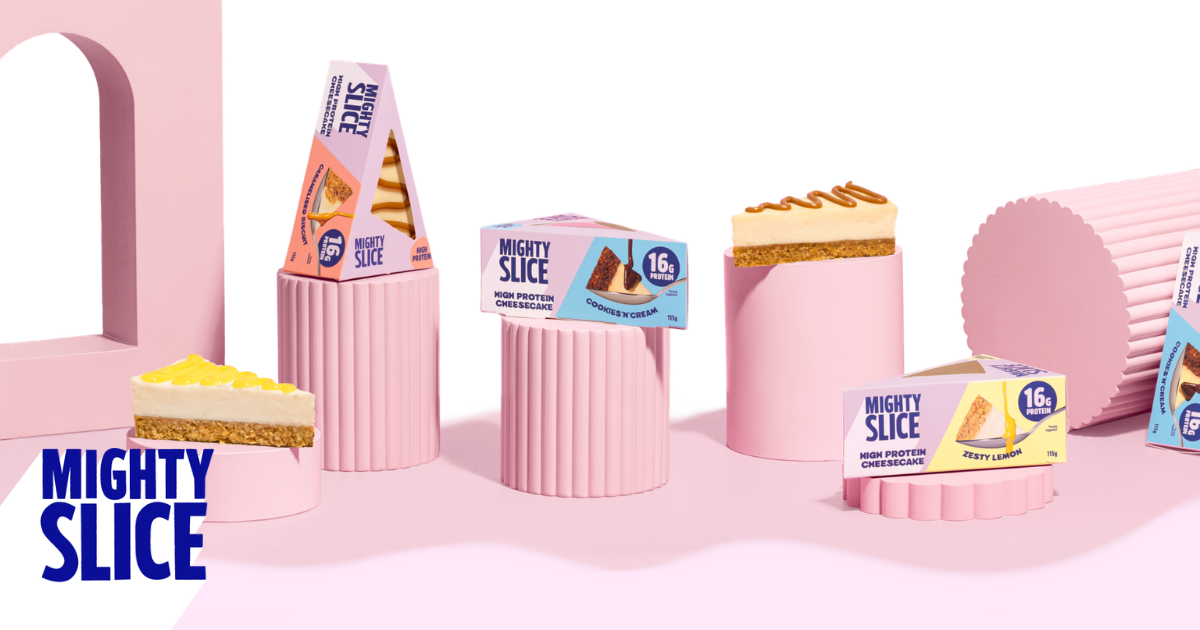
So her name is Emily Tout, and she is the co-founder and CEO of Mighty Slice, which is a high protein dessert brand that she started in her kitchen, and it grew to being a national supermarket shelves across the UK.
And she has been building with everything she has ever since. And the thing I love most about Emily's story is that it's still happening. She is not at that billion dollar exit.
She's not looking back from the finish line. She is in it right now, figuring it out, building the thing, doing the work. And I think that makes her story one of the most relatable ones that I've seen on this show.
This is the Emily Tout Story. So let's get into it.
2:12
Law Career Path
Emily grew up in the UK as what she describes as very type A. She was driven. She was the kind of person who was always the last one in the library.
She was always throwing herself into whatever she set her sights on. And from the age of eight, yes, eight, she had set her sights on law.
Now, she's the first to admit that an eight-year-old has no idea what a lawyer actually does, but she knew she wanted a high-flying career, something really impressive, something to work towards. And law fit that picture perfectly.
So that's what she built her entire life around. Every choice, every sacrifice, every late night studying while all of her friends went out, all of it was in service of that one goal. She went on to the London School of Economics.
She pursued space law, of all things, a niche she genuinely loved the topic of. She did everything right, and she got the career. She got there, but it felt completely wrong.
She described it as constraining. It was process-driven, very little room for creativity or independent thinking. She loved the subject, but the reality of being a lawyer was nothing like the idea of it.
Suddenly, this thing that she had oriented her entire identity around, it didn't fit anymore.
3:29
Entrepreneurial Awakening
She has said, I really am the sum of the people I spend the most time with. One of those people was her brother, Henry. Henry is Emily's opposite.
Where she was always chasing the corporate path, he was always doing things a little differently. He got obsessed with entrepreneurship, with Stephen Bartlett's podcast, with the idea of building something of your own.
And slowly that energy seeped into Emily. She started listening to the same podcasts, reading about founders, learning about people who had just started things. And she said something that really got me.
She said, once that seed gets planted, it's really hard to ignore because you start looking at everything differently. You start noticing problems and ideas and gaps.
It stops being passive and starts being a little uncomfortable because now you can't unsee it and the question becomes, what are you going to do about it? Entrepreneurship had never been mentioned at her school. It wasn't a path.
It wasn't an option really anyone put in front of her. And she said, well, until you're exposed to it, it almost doesn't exist. It's not like anyone tells you as a kid that you could just start something.
But her brother showed her it was real. And once she saw it, she couldn't stop seeing it. There's a moment that Emily describes where it all clicked for her.
And it wasn't this big overnight shift. It was actually just gradual, but then all at once. She had been consuming all of this content about founders and builders.
And at first, it just felt inspiring, like, oh, that's really cool for them. And then it started slowly shifting into something else. It's kind of like a quiet nagging question, like, wait, why not me?
She realized the people she was listening to weren't actually that different from her. They didn't have some big secret. They just started.
And that realization, simple as it sounds, changed everything. But I do want to mention this. She didn't exit out of law with this clear idea and a business plan.
She had loads of ideas first, but they were bad ones and the things that went nowhere. And she said that that is actually really important because you start building this muscle of just trying things without needing all of them to work.
5:36
Mighty Sliceʼs Beginning
Mighty Slice was the first idea that felt different. She kept coming back to it and it started like so many great ideas from personal frustration. She was deep into fitness and powerlifting had become a huge part of her life at college.
She actually discovered it almost by accident by her roommates and she became quickly obsessed and then she ended up starting competing. And through all of that, she had been eating a ton of protein products and she hated all of them.
They felt functional, like medicinal almost, like something that you choked down because you were supposed to not because you actually wanted to eat it. And she kept asking herself, why does it have to be like this?
Why can't something be high protein and still feel like a proper treat, like you're not compromising at all? That question is where Mighty Slice started. She went to her kitchen and started figuring it out.
She had no background in food, no manufacturing experience, no idea how to actually bring a product to market. She was just a lawyer who power lifted and wanted a dessert that didn't taste like cardboard.
Now, the early batches were not good and she's honest about that. Textures that didn't work, flavors that were off. It was a lot of trying things and starting over.
It was a process that doesn't necessarily make it onto your Instagram, but it is really the whole story. She said something about this that I think is really true. She said, you can convince yourself that something is good when it's just you.
The real test is when you hand it to someone else. She remembers the moment that other people tried her cheesecake and said, wait, this is actually really good. And that was the shift for her because now it just wasn't in her head.
Other people could taste it too. And she started thinking about branding and packaging and how this thing could exist beyond her kitchen. And that is when it became real.
She left law and she co-founded Mighty Slice in 2021 with her co-founder, Jamie. And in January of 2023, the four of them, Emily, Jamie and two others were still hand making and packaging every single cheesecake themselves in a commercial kitchen.
Hand making every one and delivering batches up and down the country, retailing in a handful of boutique stores, doing all of it by hand. And by the end of that year, revenue had grown 1900 percent. That is wild.
They launched into 260 Asda stores. I might have butchered how I said that, so I apologize if that's not how you say it. But then they also went into Sainsbury's.
Then Ocado. Again, don't know the pronunciation, so bear with me. But they ended up raising nearly a million pounds in investment.
8:13
Leaving Law
Okay. I want to sit with something that Emily has said in an interview because I think it's the most honest thing that I've heard a founder say in a long time.
When she was asked if leaving law felt risky, she said it did, but also weirdly, it didn't. Because once that shift had happened in her head, it felt more risky to stay in something that she knew wasn't right. Ooh, that hits so deep.
I want to say that again. Because once the shift had happened in her head, it felt more risky to stay in something that she knew wasn't right. And she said, the idea of not trying felt worse than the idea of failing.
I think so many of us are paralyzed by the fear of failing at the new thing. We look at that leap and all we see is what we could lose. That safety or the status or the identity that we've spent years building.
That fear is real. I'm not dismissing that. But Emily's reframe is this.
Both paths have discomfort. Staying has it. Going has it.
The question is just which discomfort are you willing to live with? And once she asked it that way, the answer was obvious. She's also talked about the identity crisis of walking away from law.
Because it wasn't just a job. It was who she was since she was eight years old. She had sacrificed so much to get there.
And there's this thing that she described as the sunken cost feeling. Like, what was the point of all of that if I'm not going to see it through?
I want to stay here for a second because I think this is the most important piece of the process that maybe a lot of people skip over because it's uncomfortable. It's not the inspiring story.
It's the part where maybe you've done everything right and you've arrived somewhere that maybe doesn't feel right anymore and you have to sit with the fact that the plan that you've been running on for a decade might not be the right plan anymore.
And I think for a lot of us, especially high achievers, especially type A people, especially people who have always had a clear path, that moment is genuinely destabilizing because your identity isn't just your job, it's your reputation, it's what
you tell people at parties, it's what your parents are proud of, or it's the version of you that exists in other people's heads. And walking away from that doesn't just feel like a career change, it kind of feels like grief.
Emily has described this as like standing at the edge of a cliff, like she was about to throw away everything she had worked for. And I think that image is so accurate because from the outside, it might look reckless. It looks ungrateful.
It looks like you don't know what you want. And the people around you, even the well-meaning ones, will say things like, are you sure? You've worked so hard to get here.
And yeah, they're not wrong. You have. That's exactly why it makes it so hard.
11:11
Skills Transformed
But here's what Emily found on the other side of that cliff. She didn't lose any of it. The decade of legal training didn't disappear.
It just changed form. She uses it every single day, whether it's contract negotiations or problem-solving, the way that law teaches you to think through a problem from every angle. None of it was wasted.
It was just preparation for something that she couldn't have predicted.
And I think that's really important to hear because I think one of the reasons that people stay in the wrong thing for too long is this belief that leaving means admitting that the years behind you were a mistake, but they weren't. They were yours.
They made you who you are. The path that you're standing on right now, even if it's not the right path anymore, got you here. And I think that feeling is so real and so under talked about because it's not just about the job.
It's about the version of yourself that you thought you were becoming. The story that you've been telling yourself and everyone around you. And to step off that path feels like you're admitting it was all wrong.
But Emily's answer to that is so beautiful. She said she didn't throw any of it away. That legal training, the problem-solving, the contract negotiation, that creative thinking, all of it came with her.
It just got applied to something different. And then there's this power lifting piece which keeps threading through everything. She started lifting with no idea what she was doing, but she built on it methodically.
She trusted the process and understood that if you do the right things consistently, the result follows. But you can't always just see it yet. And she brought that exact mindset to building Mighty Slice.
When she had no food background and didn't know how to get a product to market, she didn't quit. She just figured it out. When the early batches were terrible, she kept tweaking.
When the team was hand making every cheesecake in a kitchen, she kept going. And when she was asked in an interview what she would tell her earlier self, the one in her kitchen figuring it out, unsure of where it was all going, she said, keep going.
You're closer than you think.
13:15
Courage to Start
What is that thing in your life that you've been too afraid to try? What would you build if you actually stopped waiting for the perfect moment to feel ready?
What path are you staying on because that sunken cost feels too high, even though you already know it doesn't feel right? Emily wanted to be a lawyer since she was eight years old. She worked for over a decade to get there, and she got there.
And then she walked into her kitchen, and started making protein cheesecake instead. She had no food background, no manufacturing experience, and no guarantee that it would work. She did, though, have a question that she couldn't stop asking.
Why can't something be good for you and still feel like a good treat? And then she had the courage to find out. That's it.
She started. That's the whole thing. She just started.
Thanks for being here. I'll see you next week.
Sources & Disclaimer
Recipe for Greatness Podcast — From Powerlifting to Protein-Rich Desserts: Emily Tout's Journey with Mighty Slice (November 2024)
The Grocer — Mighty Slice Nets Almost £1M in Fresh Investment as Giles Brook Backs High-Protein Cheesecake Brand (January 2025)
Emily Tout — LinkedIn (@emily-tout)
Alice Bugeja — Instagram @aliceroserunner (reel featuring the encounter)
All facts shared in this episode are based on information available at the time of recording. Any personal reflections, interpretations, or opinions are my own. If anything is found to be inaccurate, I'm happy to issue a correction.